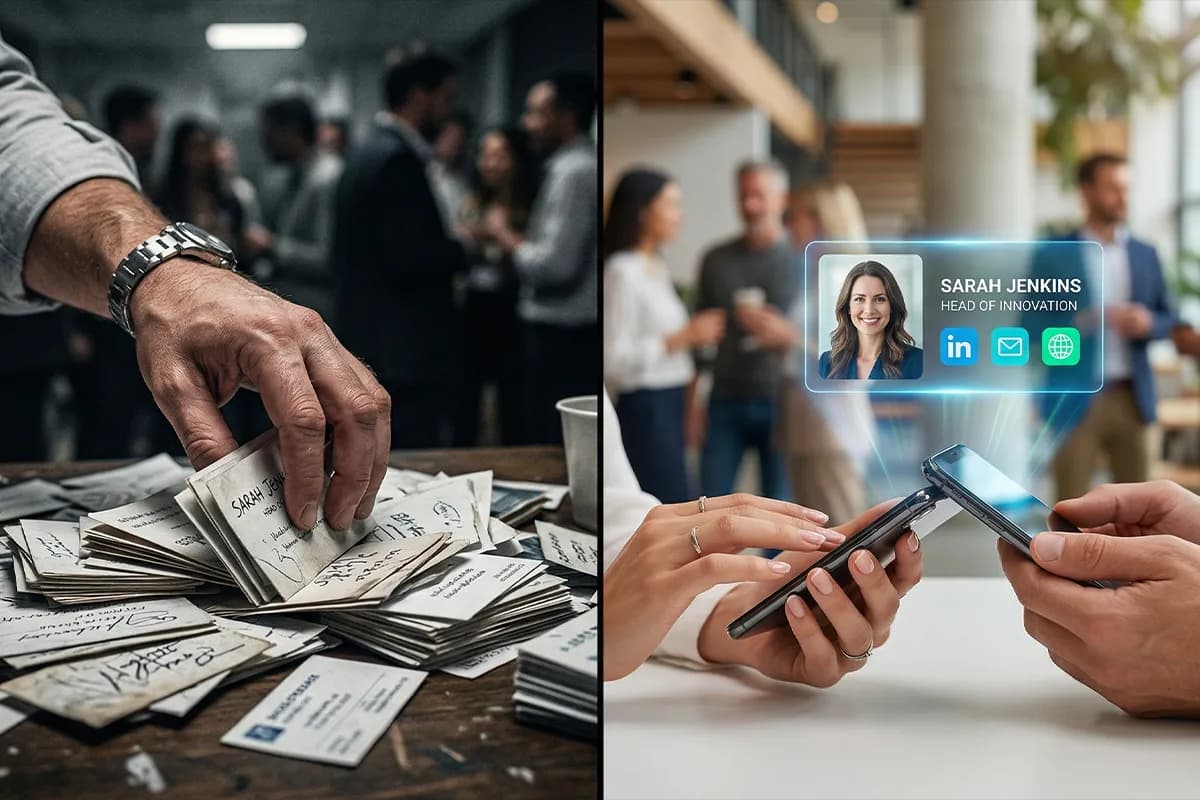

Professional networking is often described as a skill, but at its core, it is a psychological process. First impressions, memory, trust, and perceived professionalism all shape whether a connection turns into a real opportunity.
As professional networking increasingly shifts into digital networking environments, digital business cards have proven to work better not just because they are practical, but because they align closely with how the human brain processes information and builds trust.
Key Takeaways
• Professional networking success is driven by psychology as much as strategy
• First impressions strongly influence follow-up behavior in digital networking
• Digital business cards reduce friction in modern professional networking
• Trust and memorability increase when context is preserved
The Science Behind First Impressions in Networking
The science behind first impressions in professional networking shows that people form judgments within seconds of meeting.
Factors such as clarity, confidence, and ease of interaction heavily influence whether someone is remembered positively. In digital networking and in-person settings alike, smooth exchanges signal competence and credibility.
Digital business cards support professional networking by eliminating awkward pauses, fumbling for paper cards, or manual data entry.
Why People Remember Digital Business Cards More
People remember digital business cards more because they engage multiple cognitive cues at once.
Unlike paper cards, digital profiles often include photos, roles, company context, and links. This strengthens memory associations in both professional networking and digital networking contexts, making it easier to recall who the person is and why the connection matters.
Memory improves when information is meaningful, contextual, and easy to access — all strengths of digital business cards.
Reduced Social Friction in Modern Networking
Digital business cards reduce social friction by simplifying one of the most uncomfortable moments in professional networking: the exchange of contact information.
There is less pressure to perform, less risk of mistakes, and less interruption to the conversation. This smoother interaction lowers cognitive load and allows both parties to stay focused on the human connection rather than the tool, which is essential in digital networking environments.
From a psychological perspective, reduced friction leads to more positive emotional associations.
Trust, Convenience, and Perceived Professionalism
Trust in professional networking develops when interactions feel consistent, reliable, and intentional.
Digital business cards signal preparedness and adaptability. They suggest that the professional understands modern digital networking workflows and respects the other person’s time.
Convenience reinforces trust, while outdated tools can subtly undermine perceived professionalism even if unintentionally.
How Digital Business Cards Influence Decision-Making
Digital business cards influence decision-making by making follow-up actions easier in professional networking.
When contact information is saved instantly, profiles are clear, and next steps are obvious, the likelihood of reconnecting increases across digital networking platforms.
In behavioral science, reducing effort increases action. Digital business cards apply this principle directly to modern professional networking.
Why This Works in Real-World Professional Networking
The psychology of professional networking explains why some connections fade while others grow into real opportunities.
Digital business cards work better not because they replace human interaction, but because they support how people remember, trust, and decide within digital networking ecosystems.
In modern professional networking, understanding psychology is no longer optional. It is a competitive advantage.