
Summary: Freelancers sell themselves, not a company. Your digital business card is your storefront. Portfolio integration, testimonials, and pricing decisions determine whether potential clients hire you or move on. Here is how to build a card that actually wins work.
Why Freelancers Need Digital Business Cards
Freelancers operate differently from corporate employees. When someone meets an employee, the company brand already carries part of the trust. A logo, a website, and an organization do the convincing.
Freelancers do not have that safety net.
Imagine you meet a potential client at an event, in a coworking space, or through a casual introduction. The conversation is short but promising. At that moment, you need to exchange contact details quickly and professionally. You cannot start explaining your entire background.
What you can do is share a business card.
This is where digital business cards for freelancers make a real difference. They let you exchange contact information instantly while signaling professionalism. They show that you take your work seriously and keep the conversation flowing instead of turning it into an explanation session.
More importantly, the real value comes after.
When you follow up, your card allows you to show your work instead of describing it again. Your portfolio, testimonials, and links do the talking for you. The potential client can review everything on their own time, without pressure.
Go Ahead With Digital Business Cards, But Build Them With Purpose
A digital business card does not win work by itself. It creates a bridge between meeting someone and continuing the conversation.
For freelancers, that bridge needs to feel clear, professional, and useful. The goal is not to say everything at once, but to make the next step easy.
Portfolio Integration That Actually Works
Show your work, not describe it.
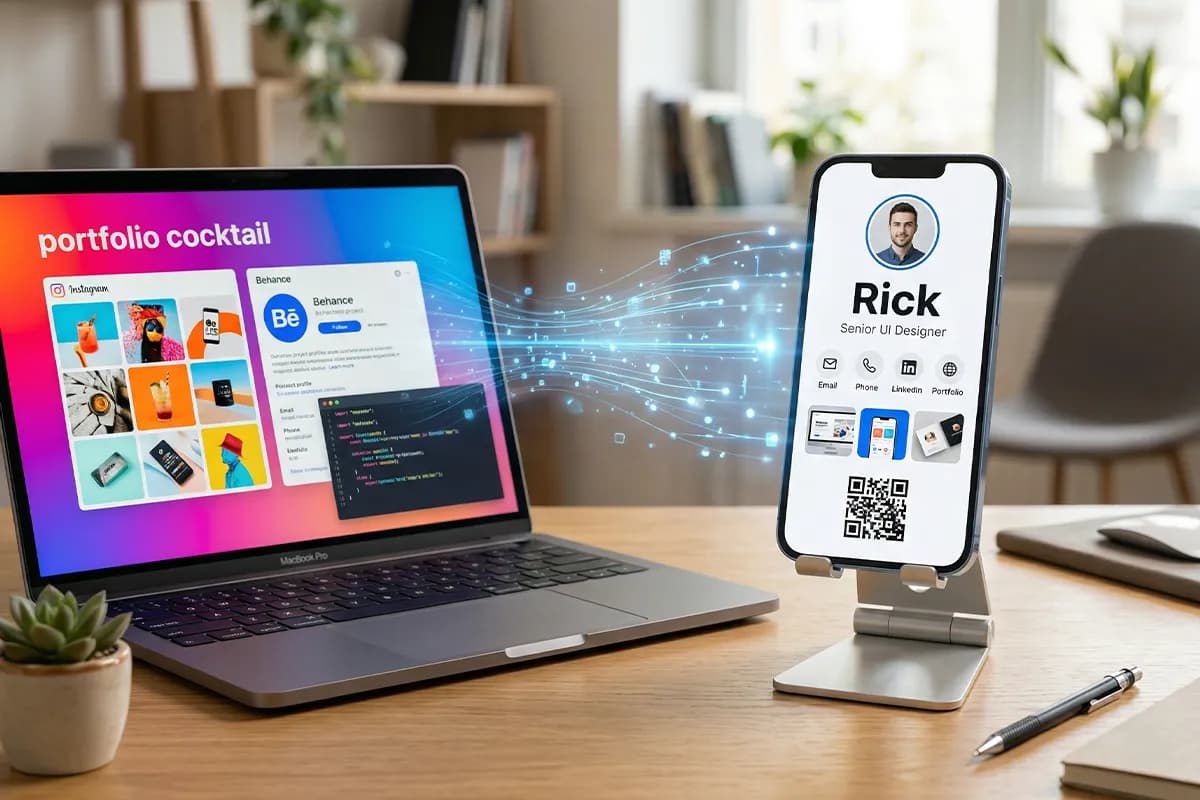
Telling someone what you do rarely convinces them. Showing them what you have already done does, so include a small number of strong examples. Three to five projects are enough if they represent your best work and the type of work you want more of. What you show sends a signal about what kind of projects you are open to.
Portfolio links should open fast and without friction. No passwords. No heavy files. No extra steps. People reviewing your card after a meeting are often busy. If it takes effort, they move on.
Design your portfolio section for scanning. Thumbnails, images, and short result-focused captions work best. Show just enough to create interest. If they want details, they will click.
Keep it current. When someone opens your card weeks later, it should still reflect your current level and recent work.
Client Testimonial Placement
Freelancers need trust quickly. Testimonials provide that trust.
They should appear high on your digital card, not hidden at the bottom. During a quick scan, people should immediately see that others have worked with you and were satisfied.
Specific testimonials matter. Statements that mention results, timelines, or collaboration style help potential clients understand what working with you actually feels like. Generic praise adds little value.
Whenever possible, include full names and companies. Real identities make testimonials believable. If you can add short video testimonials, even better. A client speaking directly builds trust faster than text alone.
The Real Goal
Your digital business card is not meant to explain everything about you.
It exists to support a professional moment, then continue the conversation afterward.
In person, it helps you exchange details smoothly and look credible. Afterward, it helps you show real work without repeating yourself. Together, this makes you appear prepared, confident, and easy to work with.
Freelancers who treat digital business cards as mini portfolios create stronger follow-ups than those who treat them like simple contact lists. The difference is letting the card demonstrate value instead of relying on explanations.
Your personal brand is your business.
Your digital business card is one of the simplest ways to carry that brand with you.
Build it to support conversations, not replace them.
That is why digital business cards for freelancers matter when turning short conversations into real opportunities.