
The short answer is yes. But the more interesting question is why it never really went away, and what is different about the way it is happening now.
During the years when remote work became the norm and digital communication tools matured to the point where almost any professional interaction could happen through a screen, there was a genuine belief in some quarters that in-person networking would become less necessary. That LinkedIn and Zoom and Slack would be sufficient. That the friction and cost of showing up in the same physical space as another person would become increasingly hard to justify when the digital alternative was so accessible.
That belief has not held up. And the professionals who acted on it have quietly fallen behind the ones who kept showing up.
What the Data Shows About In-Person Connection
Professional networking behaviours changed dramatically during the pandemic. Events disappeared. Coworking spaces emptied. The handshake was temporarily replaced by the wave at the bottom of a video call.
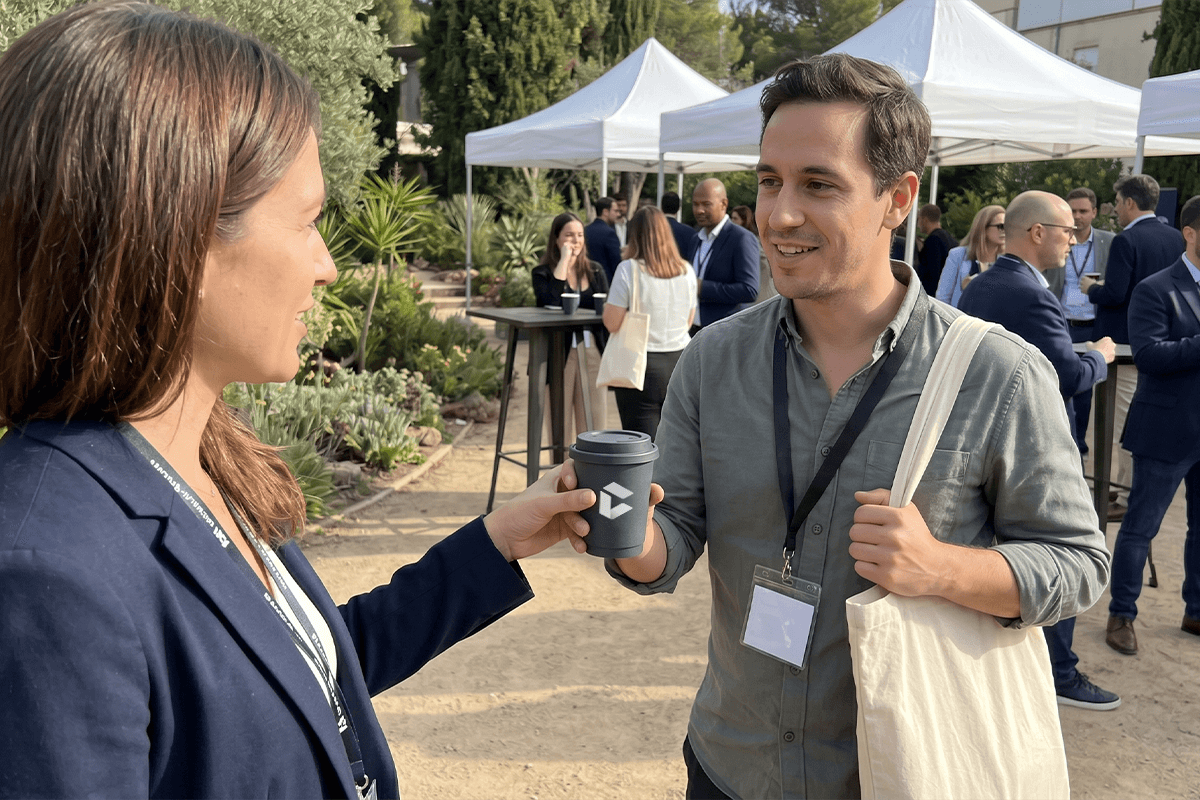
And then, gradually and then suddenly, people went back. Not just to offices, but to networking events, industry conferences, coworking spaces, and professional gatherings of every kind. The return was not uniform or complete. Hybrid work models have permanently changed how many people organise their professional lives. But the appetite for in-person professional connection did not diminish during the years when it was unavailable. If anything, it grew.
What the data consistently shows is that the quality of relationships formed in person is higher than those formed exclusively online. Trust forms faster. Impressions last longer. The serendipitous encounters that produce unexpected opportunities happen more naturally in physical spaces than in any digital environment. The professionals who maintained and invested in in-person networks throughout the remote work era emerged with significantly stronger professional positions than those who retreated entirely into digital channels.
Why Digital Networking Has Limits That In-Person Does Not
Online networking is genuinely useful. It enables connection across geographies, makes professional visibility scalable, and provides tools for maintaining relationships that would otherwise decay through distance and infrequency. These are real advantages that were not available to previous generations of professionals.
But it has a ceiling that becomes apparent over time. Digital communication is curated. People present a constructed version of themselves online, edited and optimised, that is never quite the same as the person you meet in a room. The absence of physical presence, body language, shared environment, and the spontaneous moments that happen in real spaces means that online-only relationships carry a slight but persistent sense of incompleteness.
The most valuable professional relationships, the ones that produce the referrals, the introductions, the partnerships, and the opportunities that change careers and businesses, almost always have a face-to-face moment somewhere in their foundation. Not always at the beginning, but at some point before the relationship reaches its full potential.
This is not nostalgia. It is the consistent finding of research into how trust forms between people. And it is the reason that face-to-face communication has not been replaced by its digital alternatives, despite those alternatives being better than ever.
What Is Different About In-Person Networking in 2026
The return of face-to-face networking events and professional gatherings is not simply a reversal to pre-pandemic norms. The context has changed, and so has the way in-person networking works at its best.
The professionals who are doing it most effectively in 2026 are combining the reach and maintenance capabilities of digital tools with the trust-building power of in-person interaction. They use LinkedIn and other online networkingplatforms to stay visible and warm with a broad network. They use in-person time deliberately and specifically, for the relationships that matter most and the interactions that need the depth that only physical presence provides.
The tools available to support in-person networking have also improved significantly. Digital business cards shared through QR code card scans or NFC have replaced paper in professional environments where the quality of the first impression matters. Platforms like Cardixx have introduced a location-based discovery layer that makes in-person networking more intentional, allowing professionals to see who is in the same space and what they are looking for before a conversation starts.
This combination of improved digital support and renewed appreciation for physical presence is what makes the current moment in professional networking genuinely different from what came before. It is not a comeback in the sense of returning to something old. It is an evolution toward something more sophisticated.
The Spaces Where It Is Happening
Coworking spaces have become one of the primary environments for the revival of in-person professional networking. They have always had the theoretical infrastructure for this, a concentration of professionals in the same physical space, but the community layer has historically been underdeveloped.
The most successful collaborative workspaces in 2026 are the ones that have invested in making networking an active and structured part of the member experience rather than a hoped-for side effect of proximity. Members come not just to work but because they know that the right professional encounter is more likely to happen there than almost anywhere else in their city.
Industry networking events are also seeing renewed energy. The professionals attending them are more intentional than before the remote work era. They are not just showing up. They are preparing, setting specific goals, using better tools, and following up more consistently. The quality of in-person networking is improving alongside the quantity of it.
Why This Matters for Your Professional Strategy
If you have been relying primarily on digital channels to build and maintain your professional network, the return of in-person networking is not a threat. It is an opportunity.
The professionals who show up now, who invest in face-to-face presence in the right environments at a moment when many others are still defaulting to digital, have a disproportionate advantage. The bar for being memorable and trustworthy in a physical interaction is lower than it is online, where everyone is competing for attention simultaneously.
Networking trends in 2026 favour the professionals who combine digital reach with in-person depth. The ones who use platforms like Cardixx to make their physical networking more intentional. The ones who treat showing up somewhere as a strategic choice rather than a spontaneous accident.
Face-to-face networking is not making a comeback. It never left. It is just becoming clearer which professionals understand its value and which ones are still waiting for a digital shortcut that does not exist.