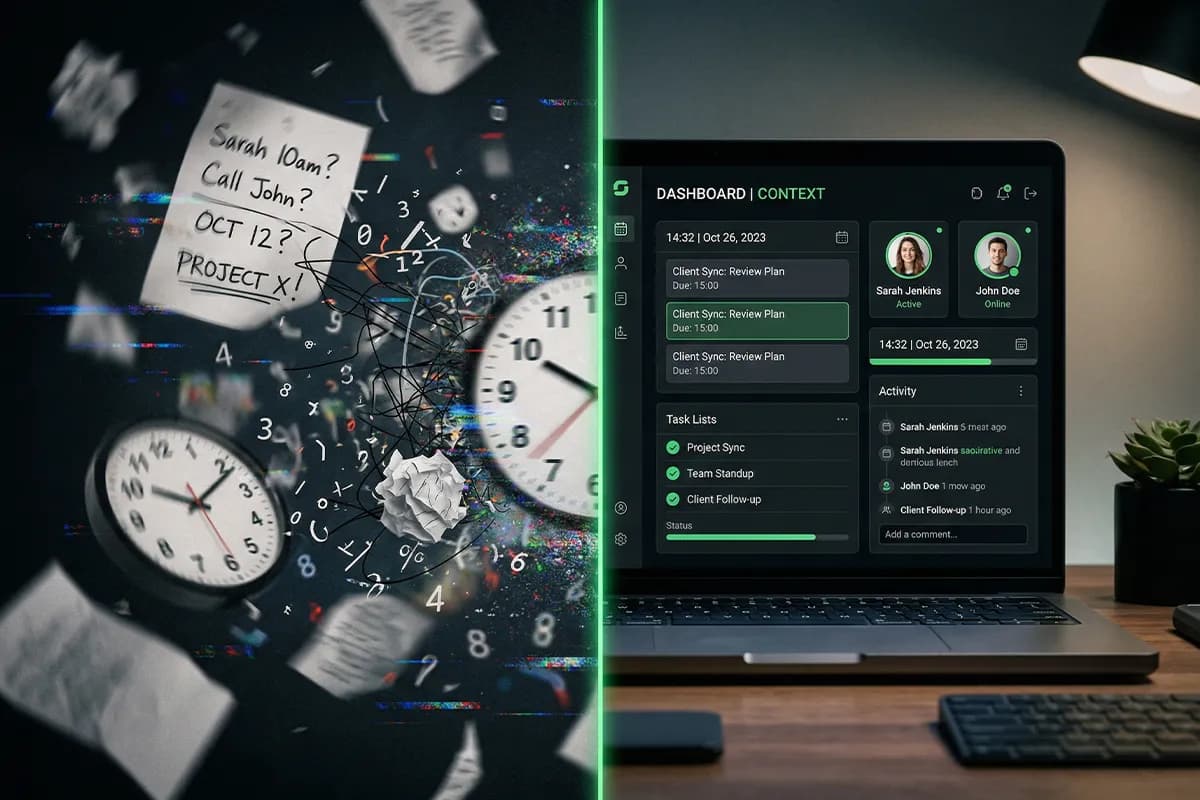

Meeting people is easy. Following up is not.
Summary: The hardest part of networking is not meeting people. It is remembering them later and actually following up. Digital business cards follow up systems save all your contact information automatically and help you stay organized so following up becomes easy.
Why Follow Ups Are the Hardest Part of Networking
Meeting people is easy. Following up is not.
Most networking does not fail at the introduction. It fails after. You meet someone. You have a good conversation. You say you will stay in touch. Then nothing happens.
This happens to everyone. Not because people are lazy. Because traditional networking creates too much work after the event ends. You need to organize contacts manually. Remember what each person said. Figure out what to say back.
It shows the follow up process is not well optimized, even though follow ups are essential for building real business relationships and long term social capital.
After networking events or meetings, you usually have good intentions and poor systems. This is where most connections quietly disappear.
Networking follows up best practices depend on two things.
- Complete information
- Clear context
Without both, follow ups feel forced or generic, and this is the reality behind most failed networking efforts and one of the most common networking mistakes people make.
What Happens After You Share a Digital Business Card
The exchange happens in seconds but the system working behind it makes all the difference.
Someone scans your digital business card. The moment they scan, their information flows into your contact system. Their full name appears. Their job title. Their company. Their email address. Their phone number. Their LinkedIn profile. Everything they chose to share transfers instantly.
No manual typing. No asking them to spell their email. No pulling out your phone to search for them on LinkedIn while they stand there waiting. The technical side handles itself so you can focus completely on the conversation.
While you talk, the system timestamps the interaction. You know exactly when you met them. If you met fifty people at a three-day conference, you can later filter by day or even by hour. "Who did I meet Tuesday morning?" The system knows.
Now comes the part that changes everything for follow-ups.
Right after your conversation, while the details are still clear in your mind, you add a quick note. Takes five seconds. "Looking for graphic designers for rebrand project." Or "Mentioned they struggle with email marketing." Or "Interested in our software, follow up in two weeks."
These notes attach directly to their contact as part of digital business card management. Not in a separate app. Not on a piece of paper you will lose. Right there with their digital profile. When you open their contact later, the note is the first thing you see.
You have context for every conversation. Those quick notes you added become your follow-up roadmap. You remember specific problems people mentioned. Specific projects they are working on. Specific ways you might help them.
Turning Connections into Real Relationships
If you want networking process to work efficiently, follow up cannot be optional or difficult. Digital business cards make this easier by removing friction from the follow up stage. Complete information, clear next steps, and better organization all lead to stronger outcomes.
Nothing is lost.
Nothing relies on memory.
Nothing depends on guessing.
This is why digital business cards are not just sharing tools. They are networking solutions designed for follow ups.
If you care about building relationships instead of collecting contacts, you need a process that makes following up easy. Digital business cards provide that system and reflect the future of networking.