
Remember when LinkedIn felt different from every other platform? You opened it and it felt serious. Professional. The people posting there were sharing industry insights, job updates, company news. It was the one place online where you could genuinely say you were working while scrolling.
That feeling is harder to find now.
How LinkedIn Has Changed Over the Years
LinkedIn launched as a professional directory. A place to put your CV online, connect with colleagues, and maybe find your next job. For a long time, that is exactly what it was. Quiet, functional, and mostly boring in the best possible way.
Then something shifted. The platform started rewarding content. Engagement metrics started mattering. And slowly, the incentives changed. People figured out that posting personal stories got more likes than sharing a case study. That vulnerability performed better than expertise. That a photo of yourself at a conference, smiling at the camera, generated more comments than a thoughtful thread about your industry.
Today, LinkedIn looks increasingly like Facebook did in 2014. Profile photo updates getting hundreds of reactions. Motivational quotes formatted like Instagram carousels. LinkedIn influencers building audiences, promoting courses, selling masterclasses. Sponsored content disguised as personal reflection. The algorithm rewards what keeps people on the platform, and what keeps people on the platform is the same thing that works everywhere else: emotion, relatability, and entertainment.
You can already see where this is heading. Stories might not be far off. Reels, perhaps. The platform that was supposed to be different is following the same gravitational pull as every other social network before it.
The Difference Between Social Media and Professional Networking
There is an important distinction that is getting blurred, and it matters.
Social media is about audience. You build a following, you create content, people consume it, and the metric of success is reach. LinkedIn increasingly rewards this model. The people who thrive there today are not necessarily the best professionals in their field. They are the ones who have learned to play the content game, to post consistently, to write hooks that stop the scroll.
Professional networking is about relationships. Specific, meaningful, two-way connections between people who have something real to offer each other. A founder who needs a technical co-founder. A freelancer who needs a client. A recruiter who needs a candidate that no job board is surfacing. These connections have a purpose, and that purpose has nothing to do with follower count.
Adding someone on LinkedIn today means almost nothing. You click connect, they accept, and you both move on. You are now one of their 2,400 connections. They are one of yours. The number grows, the relationship does not exist, and neither of you will likely ever interact again unless one of you reaches out with a specific reason.
That is not networking. It is collecting.
And the fake account problem makes it worse. Between automated connection requests, AI-generated profiles, and people who built their following through tactics rather than substance, it has become genuinely difficult to know who is real, who is relevant, and who is just there to sell you something.
New Platforms Emerging for Professional Connections
The gap that LinkedIn is leaving is real, and people are noticing it. Professionals who genuinely need to build meaningful business relationships are finding that the biggest professional network in the world is increasingly the wrong tool for the job.
Some are turning to niche communities. Private Slack groups, industry forums, Discord servers built around specific professions or interests. These spaces tend to be smaller, more focused, and more likely to produce real conversations. But they are still online, and online connections, however good the platform, have a ceiling.
Because the most powerful networking still happens in person. This is not nostalgia. It is how human beings actually form trust. When you meet someone face to face, you see them. You read their body language. You remember the conversation. You remember the person. A connection made over coffee or at an industry event has a foundation that no amount of LinkedIn messaging can replicate.
The problem is that even in-person networking is broken. People go to events, talk to a few people near them, exchange contacts randomly, and go home. Coworking spaces are full of professionals who work next to each other for months without ever having a meaningful conversation. The physical proximity is there. The structure to make use of it is not.
How Professionals Build Deeper Relationships Outside LinkedIn
This is the gap that a Vienna-based startup called Cardixx has set out to close.
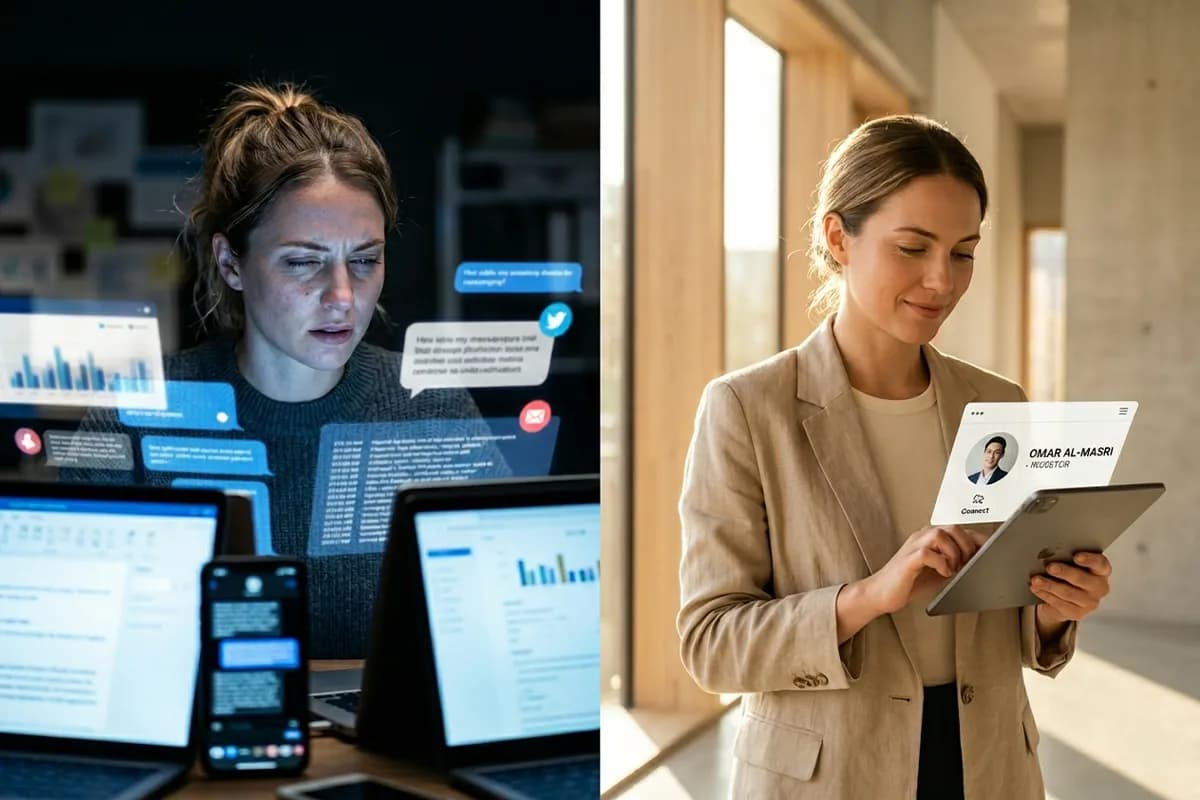
Cardixx is not another digital business card app, though it does let you create and share digital cards. What makes it different is the layer it builds on top of that. Cardixx partners with coworking spaces, business cafés, and event venues and lists them in the app as Networking Hubs. When you arrive at one of these locations, you check in. You set your networking intent, what you are working on, what kind of connections you are looking for. And you can immediately see who else has checked in, what they do, and what they are there for.
Then you can send an in-app message, arrange to meet, and when you do, exchange digital business cards with full professional profiles. The whole journey, from discovery to conversation to connection, happens with context and intention rather than luck.
What Cardixx is claiming is significant: that they complete the face-to-face networking journey rather than just digitising a business card. That the problem with professional networking today is not a lack of platforms but a lack of structure around the moments that actually matter, which are the moments when people are physically in the same room.
Choosing the Right Networking Platform for Your Industry
So where does this leave professionals trying to figure out where to actually invest their networking energy in 2026?
LinkedIn is still useful for certain things. Maintaining a professional presence. Being discoverable. Keeping warm with people you already know. But expecting it to drive meaningful new relationships is increasingly unrealistic, and using it as a substitute for real networking is a mistake that a lot of professionals are quietly making.
The more interesting question is whether tools like Cardixx can actually change behavior. Because the challenge is not just building a better product. It is convincing people to show up differently. To choose a coworking space or a business café because the networking infrastructure is there, not just the WiFi. To check in with an intent rather than hoping a good conversation happens by accident.
Can Cardixx capture the face-to-face networking market in 2026? Or are professionals too comfortable behind their screens, too used to the frictionless illusion of connection that a LinkedIn notification provides?
The honest answer is that both things are probably true for different people. There is a segment of professionals, founders, freelancers, consultants, and ambitious career builders, who already know that their next big opportunity will come from a real conversation in a real room. They are the ones who will find tools like Cardixx genuinely useful, and they are the ones who will build the kind of networks that actually move their careers and businesses forward.
For everyone else, LinkedIn will keep getting more like Instagram. And that gap in the market will keep getting wider.