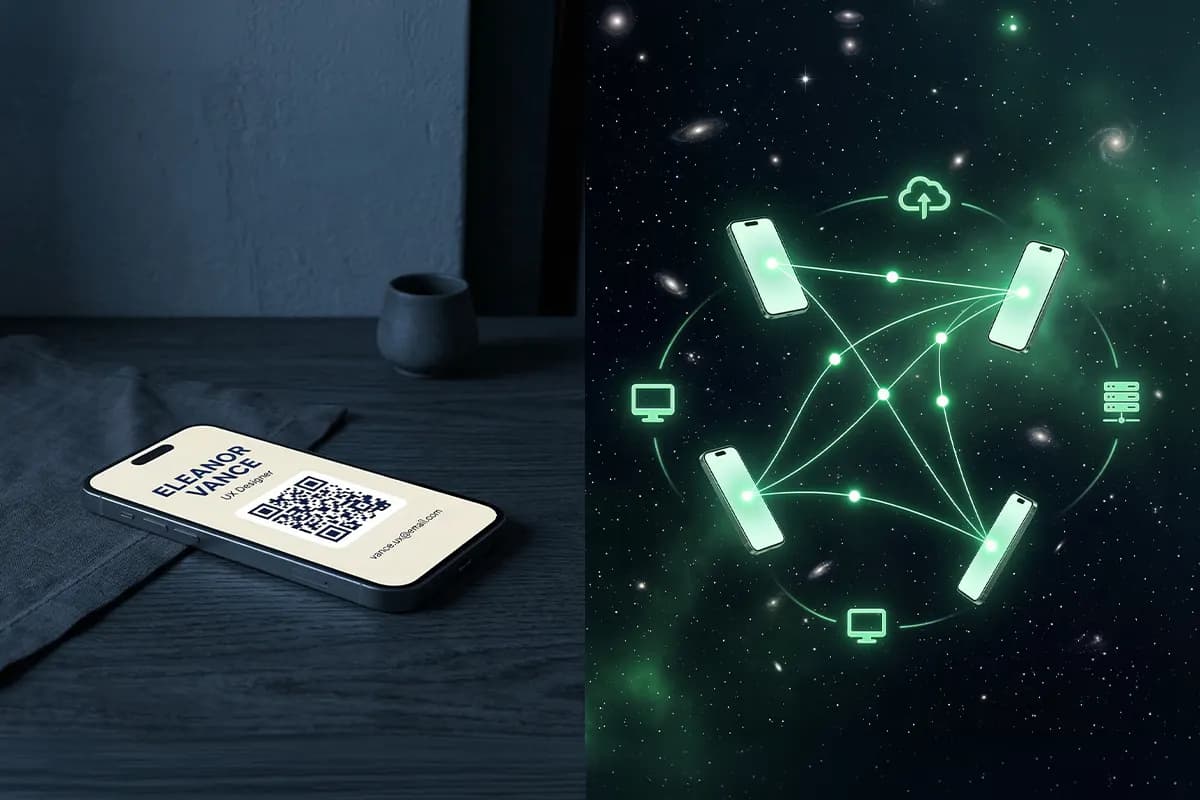

The Digital Business Card Market Is Growing — And Changing
The market for digital business cards has grown significantly in recent years. What started as a niche innovation a few years ago is now mainstream. New companies, both large and small, are entering the space regularly. The tools are improving. Adoption is accelerating.
And the benefits are real.
Digital business cards offer what professionals have been asking for. They provide strong design options, instant contact exchange through QR codes, analytics to track engagement, CRM integration, and team management features. Many now position themselves among the Best digital business card apps for 2026, focusing on convenience and scalability.They solve a clear problem, which is the friction and waste associated with printing paper cards, while supporting modern digital networking workflows.
But something interesting is happening.
Most companies in this space are competing on the same features. Better design. Faster sharing. Smarter analytics. They are all optimizing the digital business card itself, following similar digital business card best practices.
Then there is Cardixx.
Cardixx is a new player entering the market in 2026. However, it is not simply optimizing the business card. It is asking a different question. What if the card is only the beginning?
Cardixx combines digital business cards with the entire professional networking process. Check in. Discovery. Intent matching. Structured connection. Follow up. Measurement. It positions itself as a complete networking infrastructure rather than just another tool in the category of digital business card solutions.
This changes the way you think about what a digital business card tool should be. This guide will help you understand what is available in the market.
Must-Have Features: What You Should Actually Look For
When comparing digital business card apps, these are the essential features to look for and why they matter.
Easy and Flexible Card Creation — The app should allow you to create a professional looking card in minutes. You should be able to customize layouts and update information without technical effort. Your card should represent your brand and support yourpersonal brandingwithout requiring design skills or constant maintenance.
QR Code Sharing and Contactless Exchange — Sharing must be instant and simple. A QR code should work across devices without requiring the other person to download the same app. This is the foundation of frictionless networking and modern contactless sharing.
Real Time Editing and Automatic Updates — When your job title, phone number, or website changes, your card should update instantly without requiring you to resend new details manually. This supports better workflow optimization and time optimiazion.
Analytics and Engagement Tracking — You should be able to see who viewed your card, when it was accessed, and how often it was shared. This helps you understand your networking performance and measure performance improvement through real data.
CRM Integration and Contact Export — Contacts should move easily into your existing sales or marketing systems. This is especially important for business development and sales teams who rely on structured networking management and internal workflows.
Centralized Team Management — Companies need the ability to manage employee cards, maintain brand consistency, and track performance across teams. This directly supports operational efficiency and internal coordination.
Data Security and Privacy Compliance — Professional tools must protect user data and comply with relevant data protection regulations. Your professional information needs to be handled securely.
Structured Follow Up and Interaction History — A strong platform should help you track conversations and maintain context after the first exchange. Networking is not one transaction. It is a process of building long term business relationships.
Where Cardixx Is Different: Networking Infrastructure, Not Just Card Sharing
Most apps in this category handle the core features well. You can create a card, share it, track basic analytics, and manage contacts.
Where they differ is what happens after the exchange.
Most digital business card apps treat the card as the final product. Cardixx treats the card as the starting point.
With Cardixx, you create your card in seconds. That is standard. But then the networking process begins. You check in at coworking spaces and networking events. You see who else is present and what their professional intent is. You identify relevant people, message them directly, meet with context, exchange cards, and continue the interaction inside a structured system. This aligns with modern optimization management and the growing demand for measurable professional outcomes.
The card is not the end. It is the entry point into a measurable networking process that you can optimize over time.
This is why Cardixx is not simply competing on card design or sharing speed. It is solving a different problem entirely. It focuses on how to build professional relationships that are intentional, structured, and measurable.
Pricing Comparison: What You are Actually Paying For
Here is what the market actually charges in 2026. This shows the real pricing for individuals and teams.
HiHello
HiHello is widely regarded as one of the most popular digital business card platforms, especially for individuals and small teams. It offers a clear tier structure:
• Free plan: Basic digital card creation, QR code sharing, and limited features
• Premium: Around USD 6 per user per month (billed annually) for multiple cards, enhanced customization, and analytics
• Business: Around USD 25 per user per month with team management and CRM tools
HiHello competes on design flexibility, integrations, and user-friendly features, making it a common choice in enterprise environments and sales teams.
Popl
Blinq is another well-established choice, known for its ease of use and broad compatibility:
• Free plan: Basic card creation and sharing
• Starter to Premium: Approximately USD 2.99 to USD 7.99 per user per month
• Business plans: Custom pricing depending on CRM integration and team size
Blinq focuses on intuitive sharing and straightforward card management, often appealing to freelancers, consultants, and mid-sized teams that want simplicity with optional upgrades.
Blinq
Blinq is another well-established choice, known for its ease of use and broad compatibility:
• Free plan: Basic card creation and sharing
• Starter to Premium: Approximately USD 2.99 to USD 7.99 per user per month
• Business plans: Custom pricing depending on CRM integration and team size
Blinq focuses on intuitive sharing and straightforward card management, often appealing to freelancers, consultants, and mid-sized teams that want simplicity with optional upgrades.
Cardixx: A New Market Entrant With a Different Approach
Cardixx enters the 2026 digital business card ecosystem with pricing designed to support both individual professionals and broader networking infrastructure:
• Individuals:19.99 EUR per year — complete card functionality plus networking features
• Teams:4.9 EUR per user per month — centralized management, analytics, and team performance insights
• Networking hubs: Price range is based on size and visibility needs.
What This Price Difference Actually Reveals
The market splits into two distinct approaches.
Competitors like HiHello, Popl, and Bump charge higher prices because they monetize card features and add ons. Analytics upgrades. Team licenses. Hardware purchases. Custom designs. Customization options. These companies appear focused on optimizing the card itself and generating revenue at every feature tier.
Cardixx appears fundamentally different. The 19 dollar and 99 cent annual price point is not a race to the bottom. It seems intentionally low because the revenue model is not individuals buying premium card features. Instead, Cardixx seems to be building a B2B model where coworking spaces, events, and professional venues pay for access to serious networkers inside their locations.
This creates a two sided marketplace. Individuals get affordable access to networking infrastructure and networking tools. Venues get qualified traffic and a tool to activate their space as a real networking hub. The individual pricing reflects a business model oriented toward venues and organizations, not toward extracting maximum value from personal users.
This shift is significant. It suggests the market for digital business cards is splitting. One side continues optimizing the card as the product. The other side appears to be treating the card as one component of a larger networking ecosystem where venues and organizations generate the primary revenue.
Pros & Cons of Top Apps
Below is an honest comparison of the strengths and limitations of the leading digital business card apps on the market in 2026, followed by how Cardixx differs in purpose and value.
HiHello
Pros:
• Strong design flexibility with multiple templates and customization options
• Good analytics for tracking profile views and engagement
• CRM integration and Apple/Google Wallet support
• Established brand with broad adoption
Cons:
• Advanced features often require higher-tier plans
• Analytics remain focused on views and basic engagement rather than measurable networking outcomes
• Limited support for real world discovery of people at events or locations
Blinq
Pros:
• Simple and intuitive interface
• Affordable paid tiers with incremental upgrades
• Clean QR code sharing and mobile compatibility
• Good for individuals and small teams
Cons:
• Analytics are basic and not tied to structured networking behavior
• Team tools are limited or require higher subscription levels
• Does not connect card sharing with location based discovery or professional intent
Popl
Pros:
• Excellent contactless sharing experience, including NFC support on selected devices
• Good adoption among event attendees and hybrid environments
• Simple setup with physical and digital sharing options
Cons:
• Many advanced features require hardware purchases or higher monthly plans
• Analytics and follow up tools are basic or limited
• Team and discovery features remain minimal compared to platforms with broader networking focus
Cardixx: Pros and Cons
Pros:
• Combines digital business card creation with structured networking features
• Real time presence and discovery at coworking spaces and events
• Networking intent based connection and messaging
• Team management with performance tracking
• Integrated analytics tied to measurable outcomes
• Supports networking hubs and physical locations
Cons:
• More advanced platform than basic card apps — which means learning more features
• Focused on long term networking rather than simple one-time card exchange
Best Option for Networking: What the Market Actually Solves
If the goal is simple contact exchange, most leading digital business card apps will do the job. They provide clean design, QR code sharing, analytics, and CRM integration. For replacing paper cards, the market already offers several solid solutions.
But if the goal is real professional networking and measurable efficiency and productivity in professional networking, the evaluation changes completely.
Cardixx approaches the category differently. It treats the digital business card as the entry point, not the final product. After creating a card, users can check in at coworking spaces and events, see who else is present, understand their professional intent, initiate conversations inside the app, and turn introductions into structured interactions.
The platform then connects these interactions to measurable outcomes. This means networking becomes visible, trackable, and optimizable over time.
For individuals, this creates clarity.
For teams, this creates structure and accountability.
For coworking spaces and event venues, this creates an active networking ecosystem.
In that sense, Cardixx is not only competing within the digital business card category. It is expanding it.
If you are looking for a tool to share your contact details, many options exist.
If you are looking for a platform to build professional relationships in a structured and measurable way, Cardixx stands in a different position altogether.