
Real estate is one of the most relationship-driven industries in the world. Almost every transaction, whether a residential sale, a commercial lease, or an investment deal, begins with a conversation between people who trust each other. The agent who consistently closes deals is rarely the one with the most listings. It is the one whose name comes up first when someone in their network needs to buy, sell, or invest.
In an industry where relationships are the product, how you represent yourself at every interaction matters enormously. And in 2026, the professionals who are making the strongest first impressions are not handing out paper cards anymore.
Why Real Estate Professionals Need Better Networking Tools
A real estate professional's contact list is their most valuable asset. More valuable than their current listings, more valuable than their market knowledge, more valuable even than their negotiating skill. Because without the right contacts, none of those other assets produce results.
Building and maintaining that contact list requires showing up constantly in the right spaces. Property networking events, investor meetups, chamber of commerce dinners, industry conferences, developer open days. The real estate professionals who grow fastest are the ones who are visible in all of these environments consistently, over years, not just when they need a deal.
But visibility alone is not enough. What you leave behind after every interaction determines whether the relationship grows or fades. A paper card that ends up in a drawer is not a relationship. A digital business card saved instantly to someone's phone, with your full professional profile, contact details, and portfolio accessible in seconds, is a foundation.
What a Digital Business Card Does for Real Estate Professionals
For a real estate agent, a smart business card does several things that a paper card simply cannot.
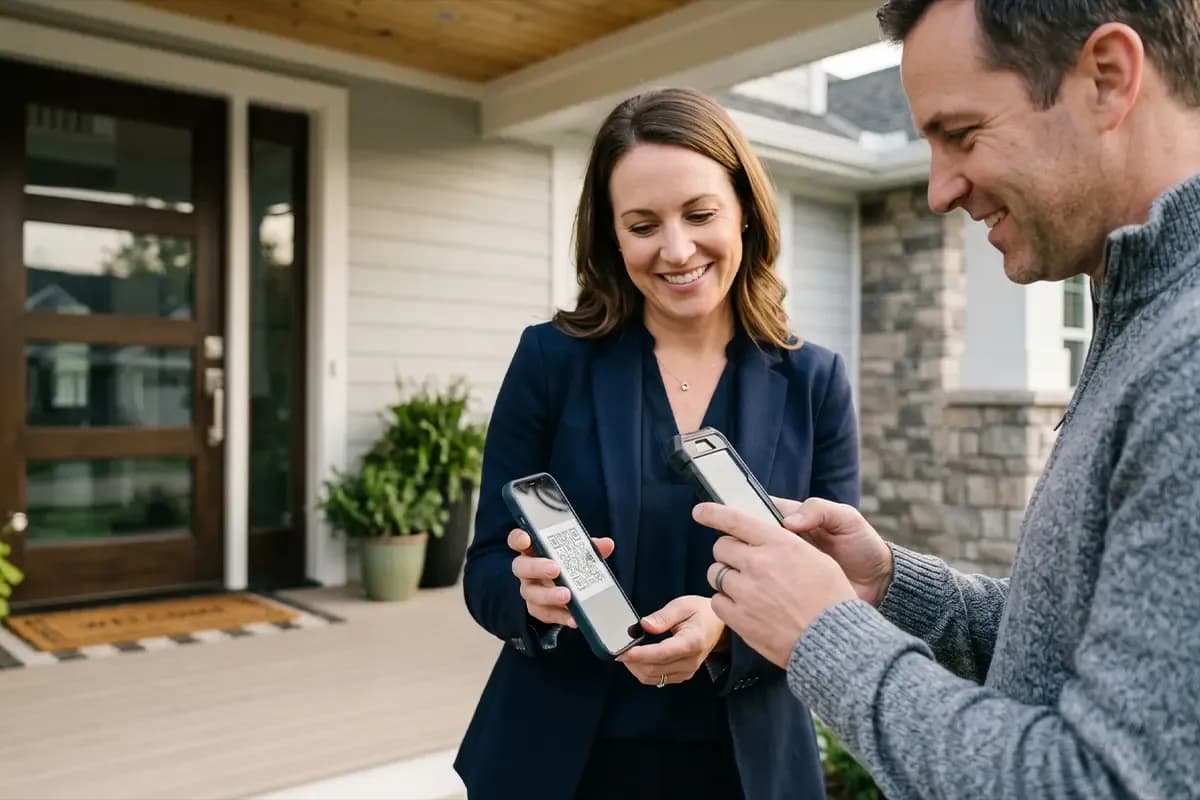
It carries more information. Your name, your agency, your phone, your email, your website, your current listings, your areas of specialisation, your LinkedIn profile, and even a short video introduction if you choose. All of it accessible through a single QR code card scan or an NFC tap. The person you just met at a property investment dinner walks away with your entire professional identity in their pocket, not just a name and a number.
It stays current. In real estate, your focus areas change. You might move from residential to commercial. You might join a new agency. You might want to highlight a recent achievement or a new area of specialisation. A virtual card updates everywhere it has already been saved. The contact your biggest client has had in their phone for two years automatically reflects who you are today, not who you were when you first met.
It creates a digital profile that works for you passively. When someone pulls up your card three months after meeting you, they see your current listings, your recent sales, your areas of expertise. The card does some of the selling before the conversation even restarts.
Networking in Real Estate: Where the Deals Actually Come From
The deals that never get advertised, the off-market properties, the investor looking to place capital quickly, the corporate client relocating a team and needing twenty apartments, these opportunities travel through personal networks. They go to the agents and brokers whose names come up in the right conversations, not to whoever happens to rank well on a property portal that week.
Networking events for real estate professionals are not just social occasions. They are where the hidden deal flow lives. Investment association dinners, property developer briefings, commercial real estate conferences, private client events at private banks. Being present in these environments consistently is how the most successful professionals in the industry build the pipeline that sustains their business through market cycles.
In these environments, contactless sharing through a digital business card is not just more convenient than paper. It is more professional. It signals that you operate at a level where details matter and presentation counts. For a client who is considering trusting you with the sale of a multi-million euro property, the way you handle a first interaction says something about how you will handle their transaction.
How Cardixx Supports Real Estate Networking
Platforms like Cardixx add a layer to in-person networking that is particularly valuable in a relationship-driven industry like real estate.
When you check in to a networking event, a coworking space, or a business gathering through the Cardixx app, you can see who else is there and what they are working on before any conversation starts. For a real estate professional, knowing that the person across the room is a private investor actively looking for commercial opportunities, or a developer scouting for a local agent partner, changes the quality of every interaction in the room.
The digital business card exchange happens through a QR code card scan when you meet in person, leaving both parties with complete, accurate profiles and a foundation for genuine follow-up. For real estate professionals who meet dozens of potential clients and partners at every event, the ability to keep those contacts organised and accessible is as important as making the connection in the first place.
The Personal Brand of a Real Estate Professional
In real estate, you are the brand as much as your agency is. Clients choose agents they trust, and trust is built through consistent, professional, and memorable presence over time.
Your digital business card is one of the most visible expressions of that brand in a networking context. The design, the information you choose to highlight, the portfolio you link to, and the way you present yourself through it all communicate something about the standard of service a client can expect from you.
Personal branding in real estate is not about being flashy or creating a social media persona. It is about being the person whose name surfaces when someone in your network thinks of a reliable, knowledgeable, trustworthy professional in your area of specialisation. Getting there requires showing up consistently, representing yourself impeccably at every interaction, and making sure that every person who meets you walks away with the tools to remember you, refer you, and reach you when the right moment comes.
A digital business card is a small thing. But in an industry built entirely on relationships, small things that make a strong impression consistently are exactly what separates the professionals who thrive from the ones who struggle.