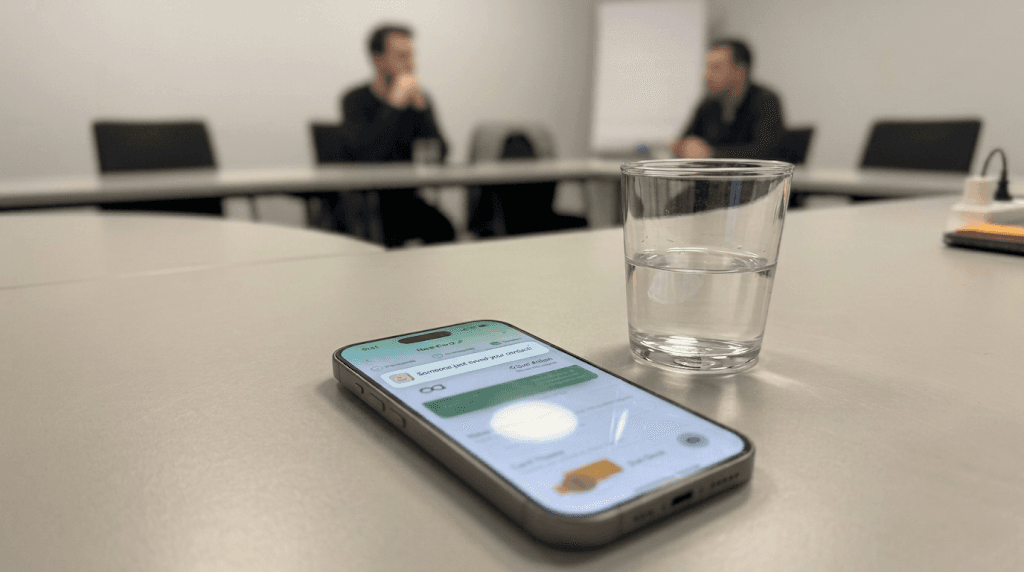

Digital business card analytics show you what happens after you share your card. They count how many people viewed it, how many were unique, which links they clicked, and how many saved or exchanged your details. Read together, these numbers tell you whether your card is doing its job and what the people you meet actually want from you.
This guide explains each metric, what it really means, which numbers matter and which mislead, and how to turn card analytics into better networking rather than a dashboard you glance at once and forget.
What digital business card analytics are
A paper card gives you nothing after you hand it over. You never know if the person read it, saved it, or lost it. Statistics show 88% of paper business cards are discarded within a week; 9 out of 10 cards you share generally end up nowhere. A smart digital business card closes that blind spot. Because the card lives online, the digital business card app behind it can record how people interact with it and show you the result. That is the real leap from a business card digital in name only to one that reports back.
That record is your digital business card analytics. At their simplest, they answer three questions. Did people look at my card? Did they act on it? And did the exchange lead anywhere? A good digital business card app turns those answers into a few clear numbers you can actually use.
The value is not the numbers themselves. It is what they let you change. Once you can see which links people click, and where your card gets opened, you can adjust what you lead with and where you spend your time. For anyone serious about professional networking, this is the difference between guessing and knowing.
Metric | Primary Focus | What It Measures | Strategic Value |
Card Views | Raw Visibility | Total times your card was opened across all sessions | Measures total exposure and overall audience engagement frequency |
Unique Viewers | Audience Reach | Number of distinct individuals who accessed your card | Differentiates broad audience exposure from repeat visitors |
Link Clicks | Direct Intent | Specific taps on destination links (booking, portfolio, social) | Pinpoints exactly what prospective contacts care about most |
Exchanges & Connections | Relationship Commitment | Contacts who saved your details or shared their card back | Serves as the primary conversion metric for networking success |
Location Data | Geographic Context | Specific venues, events, or cities where scans occurred | Identifies high-ROI networking environments and rooms worth returning to |
Card views and unique viewers
Views count how many times your card was opened. Unique viewers count how many different people opened it. The gap between the two matters.
A high view count with few unique viewers means a small group keeps returning to your card, which often points to real interest from specific people. A high unique count means your card reached many different people, which is what you want after a conference or a run of networking events.
Watch these two together rather than alone. Fifty views from forty unique people after a conference tells a very different story from fifty views by five people over a month. The first is reach. The second is a handful of people paying close attention.
Link clicks: the metric that shows real intent.
Views tell you someone opened your card. Link clicks tell you what they wanted. This is the most useful number on the whole dashboard, because a click is a small decision that reveals intent.
If most clicks land on your booking link, people are ready to talk. If they land on your portfolio, they are checking whether your work is any good. If they click your website, they want the fuller story. Each pattern tells you what to lead with next time and what people care about most.
Track clicks per link, not just clicks in total. The split between links is where the insight lives. A card with two hundred views and every click on one link is telling you exactly what to put first.
Exchanges and new connections
An exchange is the moment someone saves your card or trades details with you, rather than just glancing at it. New connections count how many of those turned into a two-way link. These are the outcome metrics, the ones closest to real networking value. Every exchange feeds directly into your sales pipeline when your card ends up in CRM like Salesforce or HubSpot. Digital lead capture reduces lead-to-CRM time from an average of 4.2 days to under 4 minutes.
Views and clicks measure interest. Exchanges measure commitment. Someone who saves your card has decided you are worth keeping, which is a far stronger signal than a view. When you compare two business networking events, the one with more exchanges was the better room for you, even if the other had more foot traffic.
Views by location
Location analytics show you where your card gets opened. This sounds minor until you use it. If your card lights up in one city after a trip, that trip built real awareness. If most opens come from a particular event or venue, that is where your audience gathers and is especially valuable for a trade show lead capture app.
Use this to decide where to show up. The places that generate views and exchanges are the places worth returning to. The ones that generate nothing, however fun, are not building your network. If you run events, an event monitoring analytics app view of where cards get opened tells you which rooms actually connected people.
Vanity metrics versus metrics that change what you do
Not every number deserves your attention, and chasing the wrong one wastes effort.
A raw view count feels good and means little on its own. It is the classic vanity metric: high numbers, no decision attached. Views only matter next to unique viewers, clicks, and exchanges, which tell you whether those views led anywhere.
The metrics worth watching are the ones that change a decision. Clicks tell you what to lead with. Exchanges tell you which rooms are worth your time. Location tells you where to show up. If a number does not change what you do next, it is decoration, not insight.
Metric Category | Metric Name | Potential Misinterpretation | Actionable Focus & Value |
Vanity Metric | Raw Total Views | A high total view count can mask that only 2–3 people kept refreshing your link. | Evaluate alongside Unique Viewers to confirm true reach. |
Vanity Metric | Aggregate Clicks | Seeing 100 total clicks feels successful, but fails to show what people looked at. | Track Clicks Per Link to discover whether people want a meeting, portfolio, or site. |
Outcome Metric | Card Saves / Exchanges | Lower volume than view counts, making it easy to overlook. | Focus on this metric; it reflects direct intent to retain your contact info. |
Outcome Metric | Venue / Location Spikes | Raw location data without venue context seems minor. | Cross-reference with your event calendar to identify which rooms yield real connections. |
How to turn card analytics into better professional networking
Numbers are only useful if they change your next move. Here is how to read the dashboard as a to-do list rather than a scoreboard.
Lead with what people click. If your booking link gets the most clicks, put it first on your card. Let the data decide your layout, not your guess.
Return to the professional networking events that produce exchanges. If one event drove ten exchanges and another drove one, you know where to spend next month. Your card analytics quietly rank your networking for you.
Follow up while interest is fresh. A spike in views after a meeting is a signal to reach out now, not next week. Pair this with your follow-up habit and the timing takes care of itself.
You can see all of this in one place when you view your Cardixx card analytics, which brings views, unique viewers, link clicks, exchanges, and location into a single view alongside your card.
Observed Data Signal | Underlying Intent / Signal | Recommended Strategic Action |
Booking link receives majority of clicks | High intent; prospect is ready to schedule a discussion | Rearrange card layout to put your booking calendar at the top of the profile. |
Portfolio / Website receives majority of clicks | Researching stage; prospect is evaluating your track record | Follow up with relevant case studies, samples, or reference projects. |
Post-event spike in views from a specific venue | Active post-meeting interest from event attendees | Send tailored follow-ups within 24-48 hours while engagement is high. |
High views, but low link clicks and zero exchanges | Contact info is seen, but lacks clear direction or incentive | Simplify card layout, reduce unnecessary links, and emphasize a primary call-to-action. |
Where card analytics stop, and networking analytics begin
Card analytics tell you what happens to your card. They do not tell you what happens to the whole relationship, the meetings, the check-ins, the connections that build over months. That is a wider picture. For enterprise teams, these analytics become a management dashboard for managing hundreds of cards.
For the card itself, the digital business card guide covers how to build one worth measuring.
Frequently asked questions
What are digital business card analytics?
They are the numbers your card records after you share it: views, unique viewers, link clicks, exchanges, and where your card was opened. Together they show whether your card is working and what people want from you.
Which digital business card metric matters most?
Link clicks and exchanges. Clicks reveal what people want, and exchanges show who decided you were worth keeping. A raw view count on its own is a vanity metric until you read it next to these.
Can a digital business card track who viewed it?
A card records views, unique viewers, clicks and exchanges, and where opens happened. It shows patterns and totals rather than turning networking into surveillance, and you control what your own card shares.
How do I use card analytics to network better?
Lead with the link people click most, return to the events that produce the most exchanges, and follow up while views are fresh. Let the numbers change your next decision rather than sit as a scoreboard.
Do free digital business cards include analytics?
It varies by tool, but the best digital business card app options include basic analytics on a free plan and richer reporting on paid tiers. Check what a free digital business card includes before you choose, since analytics is where a lot of the value sits.
Ready to see what your card is doing? View Cardixx card analytics and turn views, clicks, and exchanges into better networking.