
For a sales team, a digital business card turns every meeting into something you can measure. Each rep shares one branded card by a business card qr code or link, the exchange is captured the moment it happens, and analytics show who viewed the card and when. Instead of paper cards that vanish and follow ups that rely on memory, a manager sees real activity and reps know exactly when to reach out.
This guide shows how a digital business card fits a sales workflow, what it changes at each stage of a deal, and where it stops so you keep sensible expectations.
Why paper cards fail a sales team
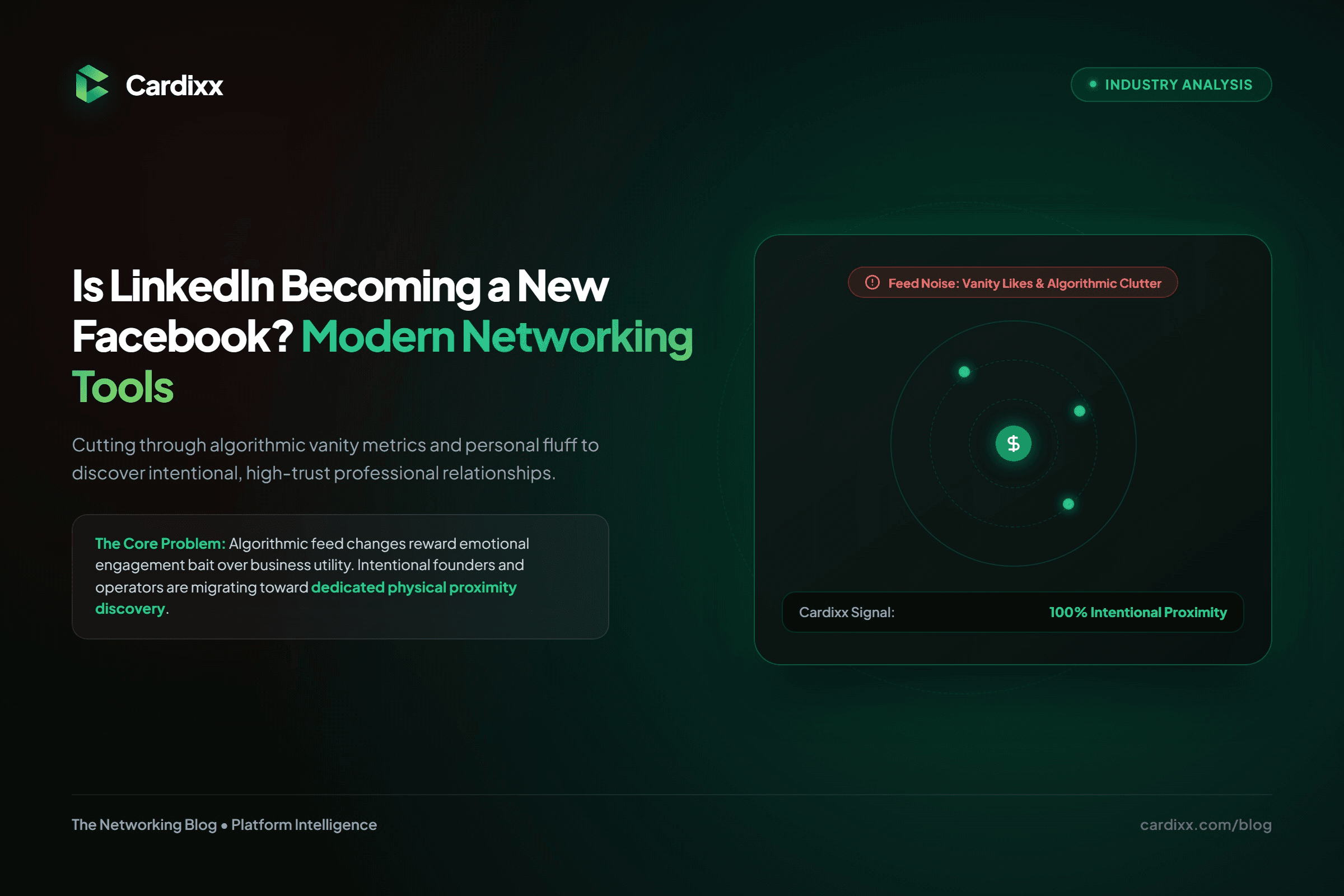
A paper card is a dead end for sales. A rep hands one over, the prospect loses it, and the exchange leaves no trace. Nobody knows if the card was kept, whether the prospect looked at anything, or when to follow up. For a team that lives on pipeline, that is lost data at the most important moment.
Multiply that across a whole team and the problem grows. Every rep prints their own card, branding drifts, and a manager has no view of what happened in the field. The meetings happen, but the signal from them disappears.
Paper card versus digital card for a sales team
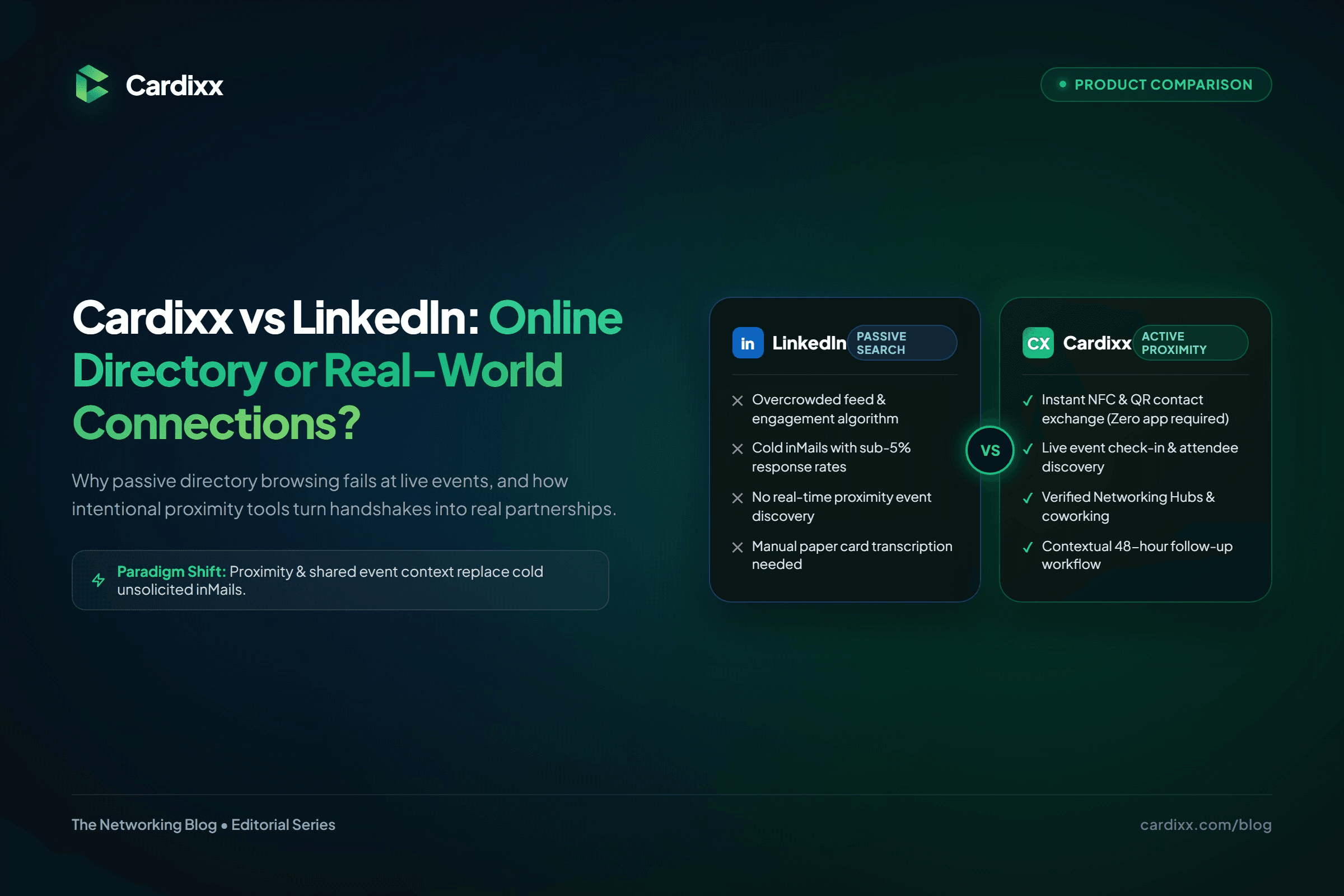
Before the workflow detail, it helps to see the contrast in one place. The table below sets a paper card against a digital business card on the factors a sales team feels every week, from cost to manager visibility. A smart digital business card keeps the signal a paper card throws away.
Factor | Paper card | Digital business card |
|---|---|---|
Cost over time | Reprint every batch | Free digital business card to start, no reprint |
Lead capture | Typed up later, if at all | Exchange captured at the meeting |
Follow up timing | Guesswork | Analytics show who viewed and when |
Manager visibility | None | Team analytics across the whole team |
Branding | Drifts rep to rep | One consistent digital business card design |
Collateral | Not on the card | Deck, case study and booking on the card |
A smart digital business card keeps that signal. It captures the exchange, links to your collateral, and reports back, so a meeting becomes a measurable step in the pipeline rather than a moment that vanishes. It turns a plain business card digital and useful, and it makes professional networking and the business networking events reps work something a team can actually track.
What changes at each stage of the deal
Here is how a digital card changes the moments that matter in a sales cycle, from the first handshake to the manager's dashboard.
Sales moment | The usual problem | What a digital card changes |
|---|---|---|
First meeting | Paper card handed over, easy to lose | Card shared by a qr code business card or link, saved instantly |
Sharing collateral | Rep promises to send a deck later | Deck, site and booking sit on the card already |
Lead capture | Details typed up later, if at all | Exchange captured at the moment it happens |
Follow up | Reps guess when to reach out | Analytics show who viewed and when |
Manager view | No visibility into rep activity | Team analytics show cards, views and exchanges |
Branding | Each rep prints their own card | One consistent branded card across the team |
The theme across every row is the same. Paper loses the signal, a digital card keeps it, and kept signal is what a sales team can act on and measure.
Turn the first meeting into captured data
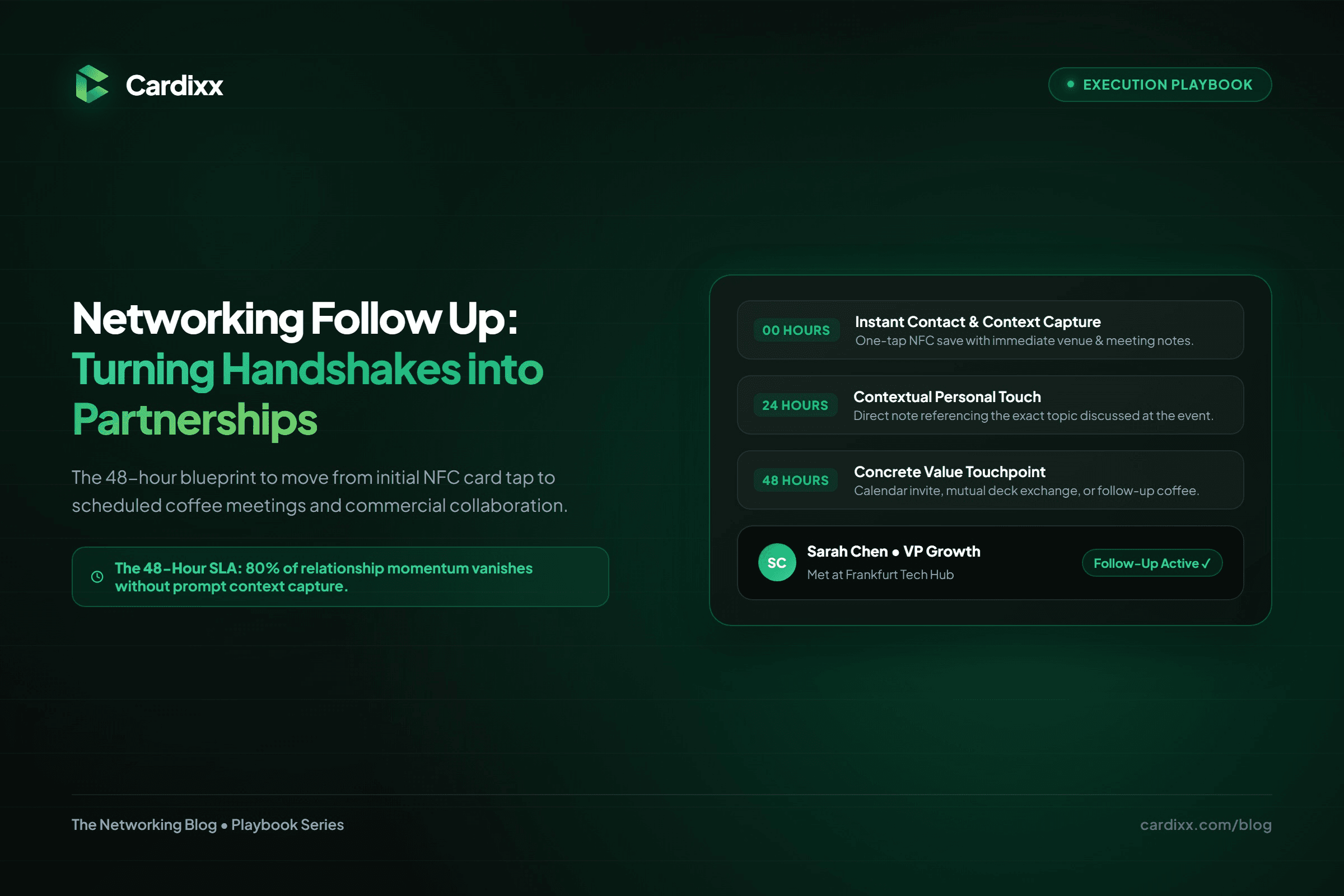
The moment a rep meets a prospect is where a sale begins and where paper fails. With a digital card, the rep can share their digital business card as a QR code business card or link, and the exchange is captured as it happens, not typed up hours later from a stack of cards.
That capture matters because memory is unreliable and manual entry gets skipped. When the exchange is recorded at the meeting, the lead is real, complete, and ready to work, before the rep even leaves the room. Sales pipeline research indicates that leads contacted within 24 hours of an in-person meeting demonstrate a 2.5x higher meeting-to-opportunity conversion rate. Direct CRM synchronization (HubSpot, Salesforce, Pipedrive) eliminates manual transcription lag and saves sales reps an average of 3 to 4 hours of weekly data entry.
Put your collateral on the card
Sales reps carry a lot: a deck, a one pager, a booking link, a case study. The best digital business card app holds all of it in one place, so a prospect who is interested can see the proof immediately rather than waiting for a follow up email that may never land. For marketing led teams, digital marketing business cards can also carry campaign links and landing pages the same way.
This shortens the gap between interest and action. If the prospect is ready, the booking link is right there. If they want to check the numbers, the case study is one tap away. The card does the work a rep used to do across three emails.
What to put on a sales rep card
A sales card earns its place by moving a deal forward, not by listing everything. The best digital business card app lets a rep lead with proof and one clear action. Here is what belongs on a rep card and why, so a business card digital and shareable does real work in the field.
Element | Why it belongs | Quick tip |
|---|---|---|
Name and role | Sets who the rep is fast | Keep it plain, not a slogan |
Pitch deck | Answers the first question | Link it, do not attach it |
Case study | Proof that closes doubt | Lead with the strongest result |
Booking link | Turns interest into a meeting | Make it the main action |
Collateral or offer | Tells the prospect what you sell | Keep it to a short list |
Analytics on | Shows who is warm | Check views before every follow up |
Follow up on signal, not guesswork
The biggest waste in sales follow up is timing. Reps either chase too hard or forget entirely, because they are guessing. A digital card removes the guess.
With digital business card analytics, a rep can see who viewed their card, which link the prospect opened, and when. A prospect who reopens the deck the day after a meeting is a warm signal to call now. A prospect who clicked the booking link but did not book is a nudge away from a meeting. The rep follows up on evidence, not a calendar reminder.
Reading the analytics signal
The point of digital business card analytics is timing, so a rep follows up on evidence rather than a calendar reminder. This table turns common signals into a next move, so professional networking becomes a measured process rather than a guess.
Signal | What it means | Rep next move |
|---|---|---|
Card viewed after meeting | Prospect is thinking about you | Reach out while it is warm |
Deck reopened | Real interest in the offer | Call and talk to the deck |
Booking link clicked, no booking | Almost ready | Send a nudge with two time slots |
Case study opened | Checking your proof | Share a similar result |
Multiple views, several people | A buying group is forming | Ask who else should be in the room |
No view at all | Cold or wrong contact | Requalify before spending more time |
Give managers a real view of the field
For a sales leader, the hardest part of field sales is visibility. You know meetings happen, but you cannot see the activity or its quality. A digital card changes that at the team level.
Team analytics show how many cards were shared, how many exchanges happened, and which reps are generating real engagement, not just logging visits. That turns a vague sense of activity into numbers a manager can coach on, reward, and forecast from. It also shows which professional networking events and meetings produce real pipeline.
You can equip your sales team with Cardixx with one consistent branded card and shared digital business card design, so every rep represents the company the same way, and the team's activity rolls up into a view a manager can actually use.
The manager team dashboard
For a leader, team analytics turn a vague sense of field activity into numbers to coach on. The dashboard below is what a manager can watch across reps and, ideally, across the business networking events and meetings the team works.
Metric | What it shows | How to use it |
|---|---|---|
Cards shared | Raw field activity | Spot reps who are not meeting people |
Exchanges made | Real connections, not just visits | Reward quality over volume |
Views per rep | Whose cards get opened | Coach the sharing that works |
Engagement rate | How warm the pipeline is | Forecast from evidence |
Top links | What prospects care about | Lead the whole team with it |
Follow up timing | Whether reps act on signal | Fix slow follow up early |
Where the card stops, and the rep takes over
Be clear about the limit, because overselling helps no one. A digital business card captures the exchange, holds your collateral, and reports the signal. It does not close the deal, run your CRM, or replace a good conversation.
Think of it as the front edge of your sales stack. It makes the meeting measurable and the follow up timely, then hands a clean, warm lead to your reps and your CRM. The card gives every meeting a better start and a clear trail. For the foundations of the card itself, the complete guide to digital business cards covers the basics.
Frequently asked questions
How does a digital business card help a sales team?
It captures each exchange the moment it happens, holds a rep's collateral in one place, and shows analytics on who viewed the card and when. That turns meetings into measurable, timely follow ups and gives managers a real view of field activity.
Can a manager see the whole team's activity?
With a team plan, yes. Team analytics show cards shared, exchanges made, and which reps drive real engagement, so a manager can coach and forecast from actual data rather than guesswork. Confirm the exact team features with the provider before rollout.
Does a digital business card replace our CRM?
No. A digital business card app sits at the front of the process, capturing and measuring the meeting, then feeds a clean lead to your CRM and reps. It is a way to make meetings measurable, not a replacement for your sales system.
How do reps know when to follow up?
Card analytics show when a prospect views the card or opens a link. A view or a click after a meeting is a warm signal to reach out then, so reps act on evidence instead of a guess about timing.
Can every rep have the same branded card?
Yes. Beyond a free digital business card, a team setup lets you give every rep a consistent branded card, so the company looks the same across every meeting while each rep keeps their own details and their own analytics.
Ready to measure every meeting? Equip your sales team with Cardixx and turn field activity into pipeline you can see.